

How to Swap Crypto Without Connecting a Wallet (Chainflip)
Öne çıkanlar
- •A Chainflip swap starts with a deposit address, not a signature — the network opens a one-time deposit channel for your trade and swaps whatever arrives there, from any wallet, exchange, or cold storage.
- •You give two addresses instead of a signature: a destination address for the output, and a refund address that gets your funds back if the swap can't execute inside your price limits.
- •No connection means no token approval left open, no signing prompt, and no extension talking to the page — the deposit channel stays open for 24 hours and then it's simply gone.
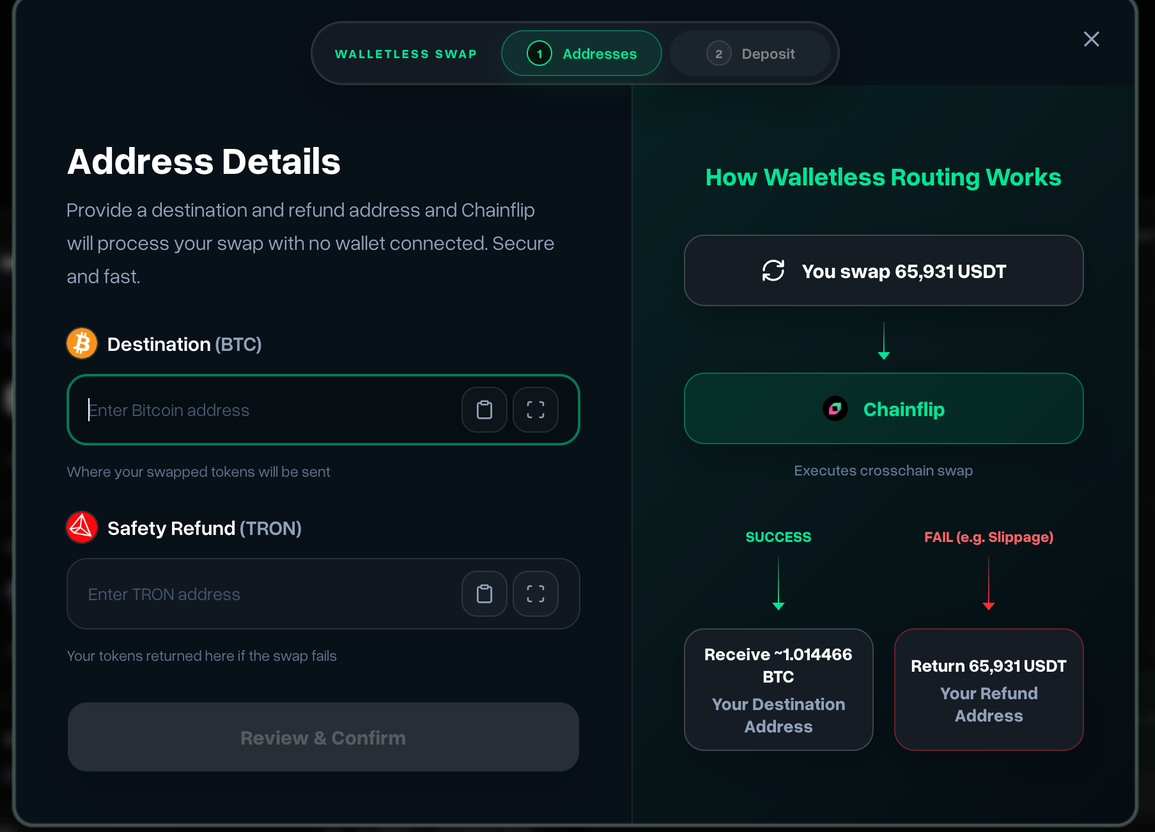
You can swap crypto without connecting a wallet. On Chainflip routes, LeoDex asks for two addresses — where the swapped asset should land, and where a failed swap should be returned — then opens a one-time Chainflip deposit channel and shows you an address and a QR code. Send funds from any wallet, exchange, or cold storage, and the swap fires automatically once the deposit is seen. No connection, no approval, no account.
Every "Connect Wallet" button is a permission request. You're letting a website read your balances, prompt you for signatures, and — on EVM chains — ask for token approvals that quietly stay open long after the trade is finished. For a single cross-chain swap, that's a lot of surface area to hand over for what is mechanically just moving money from A to B.
Chainflip's answer is to skip the connection entirely. Its own site puts it in six words: "No wallet connection needed—just send and swap." Here's what that actually means, and how to do it on LeoDex.
What a deposit channel actually is
A Chainflip swap doesn't begin with a signature. It begins with an intent.
A broker — LeoDex, in this case — submits your swap intent to the Chainflip State Chain: source asset, destination asset, destination address, refund address, price limits. The network responds by opening a deposit channel: a fresh, single-purpose address on the source chain that exists only for your swap. Validators then watch that address. When funds land, the deposit is witnessed, registered on the State Chain, and routed through Chainflip's JIT AMM. Chainflip calls the rest "fire-and-forget" — once the deposit is made, no further action is needed from you.
Two things fall out of that design, and they're the entire point:
- The channel doesn't care who pays it. Cold storage, a hardware wallet, a centralized exchange withdrawal, a shell script — if it can send an ordinary transaction, it can start a Chainflip swap.
- Nothing stays open afterwards. There's no approval to revoke, no session to disconnect, no extension holding a live connection to a tab you forgot about. The channel expires and that's the end of the relationship.
Two addresses replace the signature
Walletless routing still needs one thing a connected wallet gives you for free: somewhere to put the output. So LeoDex asks for two addresses up front.
- Destination address — the wallet on the target chain where your swapped asset lands.
- Safety refund address — on the source chain, used if the swap can't execute inside your price limits.
That second address is Chainflip's Fill or Kill protection, and it's the reason walletless doesn't mean "hope for the best." Your swap carries a minimum accepted price and a retry duration. If available liquidity can't meet that price inside the retry window, the funds are returned to your refund address instead of filling at a rate you never agreed to. LeoDex validates both addresses against their own chains before it lets you continue — paste a Bitcoin address into the TRON field and the button stays dark.
How to do it on LeoDex
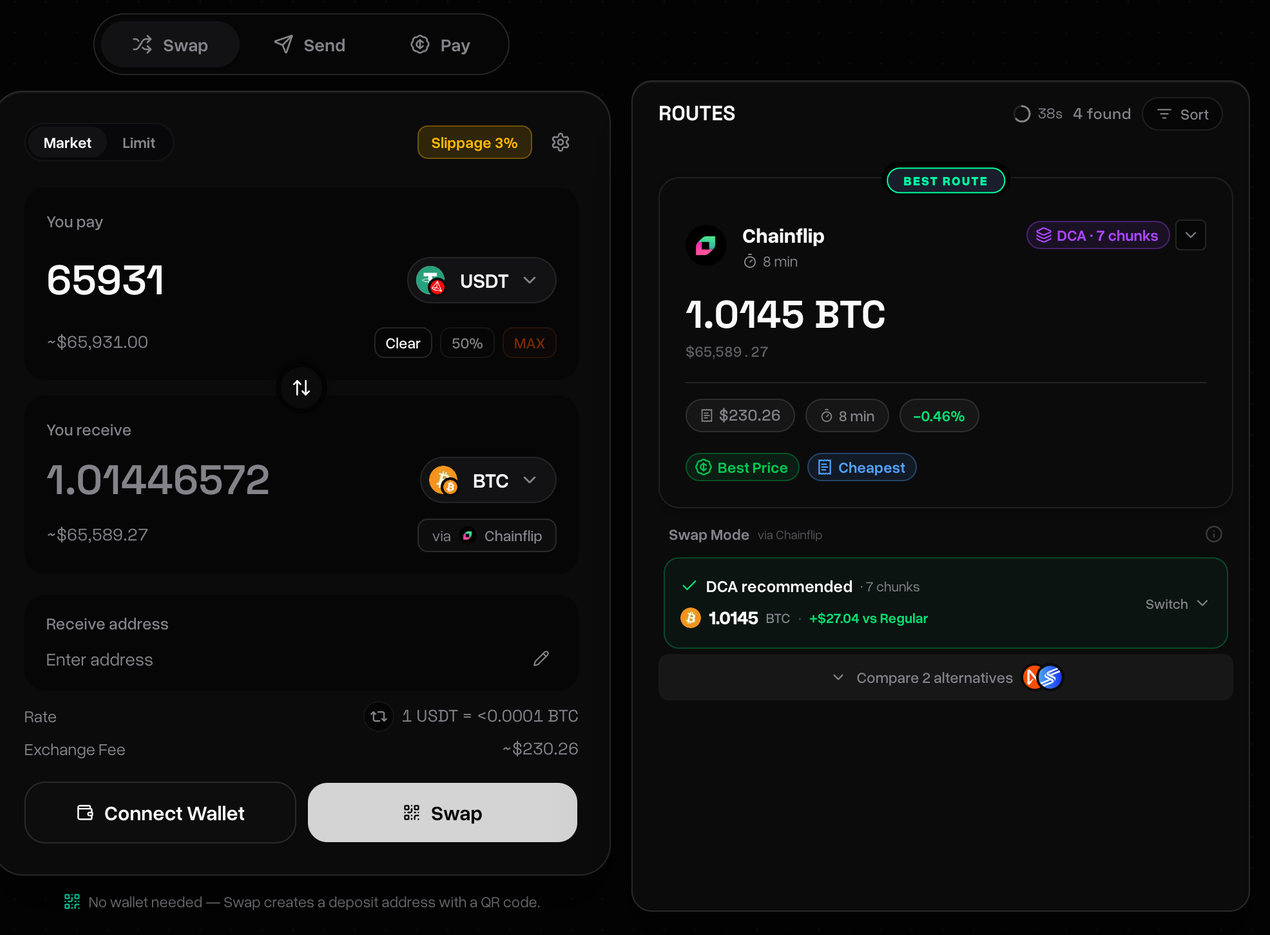
- Enter your swap — don't connect. Pick your pair and amount at leodex.io. With no wallet connected, LeoDex still streams live quotes from every protocol and shows two buttons: Connect Wallet, and Swap. Take Swap.
- Give the two addresses. Destination, then safety refund. Paste or scan a QR for either.
- Review and confirm. LeoDex asks Chainflip to open the deposit channel. This takes a few seconds.
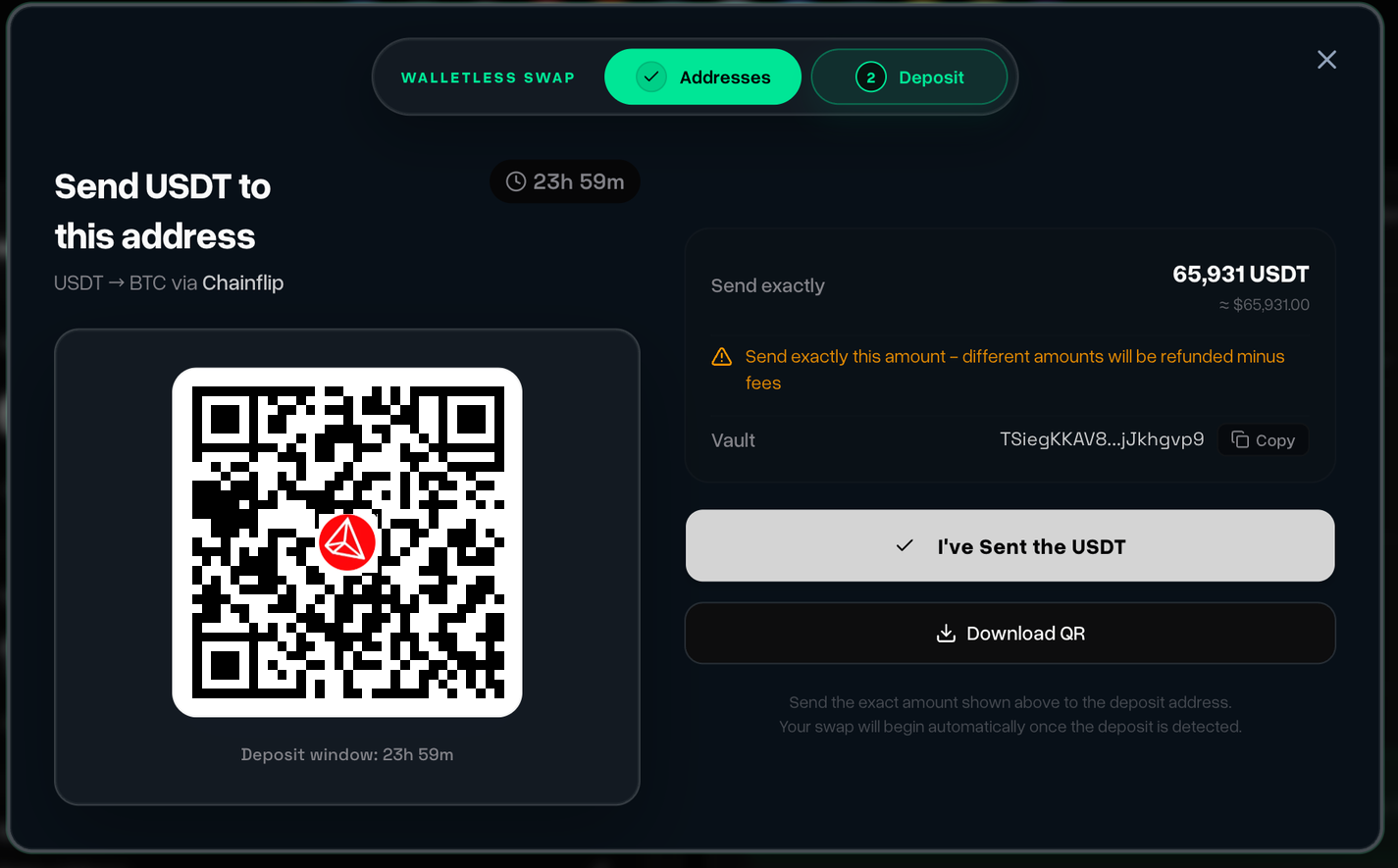
- Send from anywhere. You get a deposit address and a QR code with a 24-hour window. Send the exact amount shown, from whatever holds your funds. The swap starts by itself when the deposit is detected.
What can go wrong
The honest list, because a deposit address is unforgiving in ways a wallet prompt isn't:
- The 24-hour window is real. Chainflip's docs are blunt: channels stay open for 24 hours, after which "the network may no longer recognise late deposits." Open the channel when you're ready to send, not the night before.
- Send the exact amount. Your price limits were built around the number you were quoted. A different amount can come back refunded minus fees.
- Never send straight to a vault, and never reuse an old address. Every swap gets its own channel. Funds sent to Chainflip vaults without one "will result in the loss of funds" — the network has no instructions for them.
- The source chain sets the clock. Bitcoin deposits need 3 confirmations (~30 minutes) before they're witnessed; Ethereum takes roughly 6 blocks (~90 seconds). A slow swap is usually just Bitcoin being Bitcoin.
- Boost fees aren't refunded. If you used Boost and the swap ends up refunded anyway, that fee doesn't come back.
Start a walletless swap
Wallet-connect was never the product. It was plumbing everyone got used to, and then mistook for the only door. Chainflip's deposit channel makes it optional — and the moment it's optional, you notice how much of the risk you'd been carrying lived in the connection rather than the trade.
Two addresses, one deposit, nothing left open. Open leodex.io, pick a Chainflip route, and press Swap without connecting anything.
Sık sorulan sorular
Can I swap crypto without connecting a wallet?
Yes. On Chainflip routes, LeoDex opens a one-time deposit channel and gives you a deposit address with a QR code. You provide a destination address for the output and a refund address for failures, then send funds from any wallet, exchange, or cold storage. No wallet connection, no account, and no KYC.
What is a Chainflip deposit channel?
A deposit channel is a single-purpose address on the source chain that Chainflip opens for one specific swap. A broker registers your swap intent — assets, destination address, refund address, and price limits — on the Chainflip State Chain, and validators watch the channel address. When funds arrive, the deposit is witnessed and the swap executes automatically.
Why does a walletless swap need a refund address?
Because there is no connected wallet to send funds back to. The refund address is Chainflip's Fill or Kill protection: your swap carries a minimum accepted price and a retry duration, and if liquidity cannot meet that price within the retry window, your funds are returned to the refund address on the source chain instead of filling at a worse rate.
Can I send from a centralized exchange or cold storage?
Yes — that is the main advantage. The deposit channel accepts an ordinary transaction from any source, so an exchange withdrawal, a hardware wallet, an air-gapped signer, or a script all work identically. Send the exact quoted amount, and make sure the exchange sends on the same chain as the deposit address.
How long is a Chainflip deposit address valid?
24 hours. Chainflip's documentation states that deposit channels remain open for 24 hours, after which the network may no longer recognise late deposits. Open a new channel for every swap and send promptly rather than saving an address for later.
Is a walletless swap safe?
The swap itself is non-custodial and the trade-offs are different rather than worse. You never grant a token approval, never sign anything, and leave no open session — but you do have to get the deposit address, chain, and amount right, since a deposit address has no confirmation prompt to catch a mistake. Fill or Kill protection returns funds to your refund address if the price cannot be met.